The recent 2026 U.S. Annual Conference of the Global Clinical Supplies Group in San Diego felt different than previous years. In the past, these gatherings often focused on the promise of distant technologies or abstract innovations. However, the tone this year was grounded in a heavy sense of pragmatism. Leaders from the largest pharmaceutical organizations and supply chain partners gathered to discuss a system that appears to be operating under extreme structural strain.
Across every session, from forecasting and labeling to drug accountability and direct to patient delivery, a clear pattern emerged. The clinical supply industry is currently caught in a cycle of managing operational symptoms. While the presentations were rich with data regarding these pain points, there was a noticeable silence regarding the root cause of these issues. As an industry, we have become experts at containing the consequences of a broken model, but we have yet to address the underlying disease.
The Five Symptoms of a System in Distress
The conference effectively documented five recurring themes that signal the traditional clinical supply architecture is no longer fit for modern trial complexity.
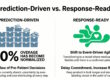
First, there is the exhaustion surrounding forecasting. Presentations by supply leaders, including those from AbbVie, highlighted the constant tribulation of enrollment variability and shelf life constraints. The industry remains trapped in a forecast driven model where success is measured by how well we can predict the future. When those predictions fail, as they often do in complex global trials, the result is massive overage and waste. In late phase trials, inventory overage regularly reaches 40 to 50 percent. At GCSG, the proposed solution was usually to forecast better using AI or simulation, rather than questioning why the model requires such high levels of speculation in the first place.
Second, we saw the sustainability crisis of the direct to patient delivery model. What was once a conceptual goal for patient access has become an administrative and financial burden. Speakers raised concrete concerns regarding technical support gaps, patient privacy, and the sheer cost escalation of repeated patient level shipments through premium couriers. The industry is realizing that solving a healthcare delivery problem inside a logistics or courier workflow is inherently fragile.
Third, labeling continues to be a hidden bottleneck that limits trial agility. Jennie Deem of Eli Lilly noted that labeling often becomes a critical path delay due to late protocol changes and country specific regulatory differences. Because labels are created for future patients instead of confirmed ones, any minor amendment triggers a massive campaign of recall, relabeling, and redistribution.
Fourth, drug accountability and reconciliation are breaking under their own weight. Currently, the industry assumes that accountability is something that is accumulated during a study and then intensely reconciled at the end. This end loaded approach leads to high labor costs and significant audit risks. A major signal from San Diego was that if reconciliation is painful, it is because accountability was not structurally continuous from the start.
Finally, there is the growing risk surface of governance and blinding. Many supply failures discussed were not technical in nature but were actually failures of role clarity and coordination. Blinding risks are often the result of process gaps rather than malicious intent, yet we continue to rely on after the fact coordination to manage these risks.
Identifying the Disease Behind the Symptoms
If these are the symptoms, what is the root cause? The 2026 GCSG conference showed that the industry is focused on containing consequences rather than replacing the architecture that produces them. We are spending more energy trying to manage forecast error than we are building a system that reduces the need for forecasting altogether.
The disease is a supply architecture that is speculative by design. The traditional model requires medication to be manufactured, packaged, labeled, and shipped to a site or depot months before a patient demand event is even confirmed. This places an enormous amount of value at risk. When the reality of the trial inevitably shifts, the supply chain cannot respond because the product is already locked in a specific form and location.
This speculative release model is what necessitates the 40 percent overage benchmarks that we now treat as an inevitable cost of doing business. We are essentially trying to optimize a linear chain when modern trial complexity demands an event driven network.
Precision Dispensing: Treating the Root Cause
At RxE2, our position is that the industry no longer needs to be convinced that these problems exist. GCSG 2026 provided the industry voiced validation of the problem space. The real challenge now is to move toward a structurally different answer. We call this Precision Dispensing.
Precision Dispensing is not a tool to make the current model slightly faster or more visible. It is an architectural shift that addresses the root cause of supply chain waste and fragility by moving the dispense function to local licensed pharmacists.
Instead of a forecast driven release, Precision Dispensing creates an event driven release. The medication remains in bulk form until a valid prescription exists for a specific patient. Only at that moment is the final patient specific label applied by a professional pharmacist under the governance of a Pharmacy Manual.
This approach treats the disease in several ways:
- It eliminates the labeling bottleneck. By applying labels at the point of dispense, protocol changes do not trigger expensive relabeling campaigns. The update happens at the pharmacy level in real time.
- It provides a sustainable path for patient centric distribution. By utilizing professional pharmacy infrastructure rather than courier workflows, we achieve the goals of direct to patient delivery without the associated logistics baggage. We move from courier logic to healthcare logic.
- It creates continuous accountability. Because every dispense and return event is documented in real time by licensed professionals, the record is built as the trial progresses. Discrepancies surface immediately rather than being discovered during a stressful closeout period.
- It hard codes governance. Precision Dispensing is governance native. It builds the separation of roles between unblinded and blinded pharmacists into the operating model itself, reducing the reliance on generalized cross functional coordination.
The Agility Dividend
When we treat the root cause, we unlock a level of trial agility that better forecasting or faster couriers can never provide. Sponsors who shift their focus from prediction to response can see a significant reduction in the amount of value they place at risk.
The transition from a reactive supply chain to a predictive ecosystem is the current industry imperative. However, true prediction does not come from a better dashboard. It comes from having fewer speculative decisions to make. By shortening the last mile and linking supply directly to confirmed patient demand, Precision Dispensing reduces the consequences of uncertainty.
The 2026 GCSG conference documented an industry that is exhausted by the symptoms of an outdated supply model. The descriptions of pain regarding labeling, waste, and accountability were clear and consistent. It is now time for the industry to look beyond the symptoms. We must stop trying to manage the consequences of a broken architecture and start building a model that aligns clinical supply with the professional practice of pharmacy and the truth of patient demand.
The future of clinical supply is not about being better at guessing. It is about being structurally ready to respond. At RxE2, we are ready to help you move from documenting symptoms to treating the root cause.