Introduction
Following our deep dive into the mechanics of clinical trials with Austin Tull, we continue our series aimed at demystifying the evolving landscape of clinical research. While the “what” of clinical trials is rooted in safety and efficacy, the “how” is undergoing a radical transformation. This shift is known as Decentralized Clinical Trials (DCT), a term that is often misunderstood as a specific piece of technology rather than a fundamental shift in research philosophy.
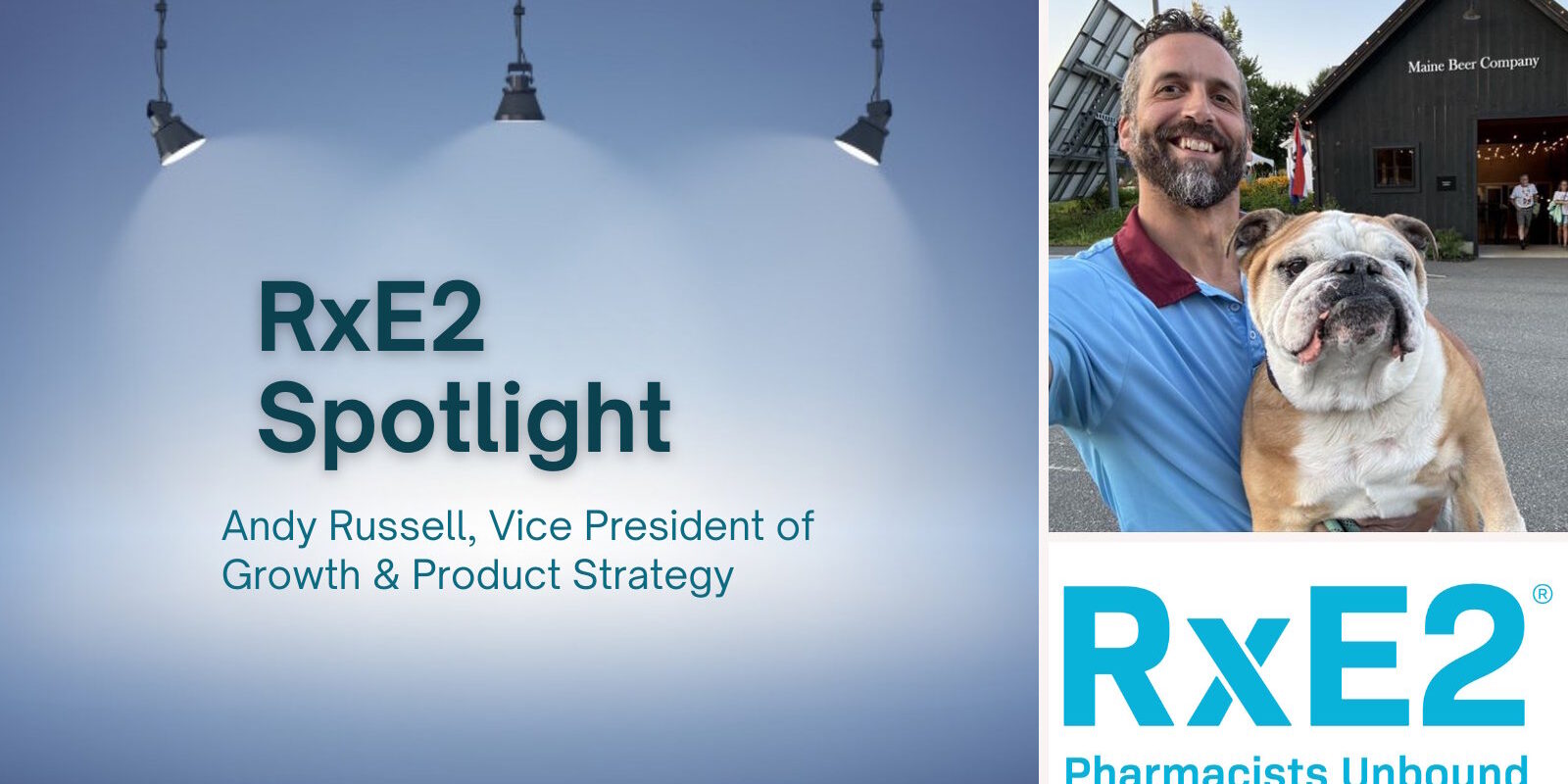
Our Pharmacy Network Manager, Teresa, sat down with Andy Russell, Vice President of Growth & Product Strategy at RxE2, to discuss how this decentralized approach is bridging the gap between major research institutions and the communities where patients actually live. With a career spanning research IT, software product management, and even consumer electronics, Andy brings a unique perspective on how to balance high-tech execution with the high-touch care that only a pharmacist can provide.
Q&A with Andy Russell, VP of Growth & Product Strategy
Teresa: Welcome, Andy. Thank you for joining me to discuss decentralized clinical trials. Could you share a bit about your experience in this space?
Andy: Thanks for having me. I started in 2009, working across a broad spectrum of clinical trial workflows, from contracts and regulatory documentation to study recruitment and site monitoring. I’ve worked as a product manager developing software to support trials and even spent time in the home security world, which gave me a different perspective on software development. Eventually, I joined a company that was an early adopter of DCT as a foundational approach, and now at RxE2, I’m connecting all of that to the practice of pharmacy.
Teresa: We hear the term “DCT” constantly. Can you explain what decentralized clinical trials actually are?
Andy: To me, it didn’t really make sense to think of DCT as a “type of trial.” It’s more of a strategy. Basically, it means taking any part of the study journey outside the traditional clinic setting and allowing patients to perform activities at home or at a local facility. It’s a strategy to make the trial fit the patient’s life, rather than the other way around.
Teresa: How does this differ from the traditional model?
Andy: In a traditional study, all activities happen at a research site. In a DCT strategy, a patient might only go to the main site quarterly for critical visits. Interim visits happen at home or at a local pharmacy, which could be far less burdensome. This allows us to broaden our search for patients. They don’t have to live near a major research center to participate, which can deliver better recruitment, compliance, and retention.
Another huge difference is the data. Traditional studies give you a “snapshot” of the patient every four to six weeks. If DCTs are done right, sensor-based technologies and wearables allow for a continuous view of the patient’s vitals, sleep, and medication adherence in real time. We can learn faster if a drug is working or detect adverse events much earlier.
Teresa: What do you see as the biggest challenge in moving to this model?
Andy: It boils down to execution. When you move activities out of the clinic and away from the direct watch of the investigator, you may put oversight and safety at risk. However, technology can mitigate this by giving investigators real-time data.
The stakes are also much higher than in other industries. If you miss a detail on a DoorDash order, it’s a minor inconvenience; if you miss something in a clinical trial, the impact is significant. The challenge is ensuring the quality of execution remains high even when the model is outside an investigator’s traditional comfort zone.
Teresa: RxE2 is focused on engaging community pharmacies. What is the specific benefit of involving a local or central pharmacy in a DCT?
Andy: A central pharmacy is a turnkey solution for managing drug supply and logistics; They are experts at getting products to patients and maintaining accountability. But the local pharmacy is where the magic happens for the patient experience. It’s a comfortable, familiar setting with a professional they already trust. If a patient can do their interim visits with their local pharmacist, how much more likely could they be to stay on track and complete the trial?
Teresa: How does handling investigational products differ for a pharmacist compared to FDA-approved medications?
Andy: The regulatory framework is the key difference. It requires more rigorous training, more stringent documentation, and absolute auditability. Labeling is different, and access control is vital. You also have the Institutional Review Board (IRB), or Ethics Committee, which acts as the top-level advocate for the patient, ensuring every moral, ethical and regulatory obligation is met by the sponsors and the sites.
Teresa: What is driving the sudden momentum for DCTs?
Andy: It’s the 80/20 challenge. Right now, 80% of research happens in institutions, but only 20% of the population lives near them. Conversely, 80% of the population lives in communities where only 20% of research occurs. To be confident a drug is safe for everyone, regardless of race, age, or geography, we have to reach those communities. Technology is finally bridging those gaps, much like how logistics have evolved to allow for next-day delivery in any small town.
Teresa: Any final thoughts on the future of this approach?
Andy: We can’t forget the human element. Technology isn’t always better. Does a patient want to be sent home with a box of devices and an electronic consent form on a tablet, or do they want a face-to-face conversation? Our goal is to make the patient and the site successful. If we focus our energy on creating an experience they feel confident in, we will get the high-quality data the trial needs.
Final Words
As Andy highlights, the transition to decentralized trials is not just about adopting new software; it is about a strategic commitment to inclusion and execution. Leveraging the existing trust between patients and their community pharmacists, allows RxE2 to help balance the 80/20 research gap. The future of clinical research lies in making participation a seamless, supported, and human-centric experience.